The Poet's Voice in a Different Key
W.S. Merwin's Enduring Environmental Legacy
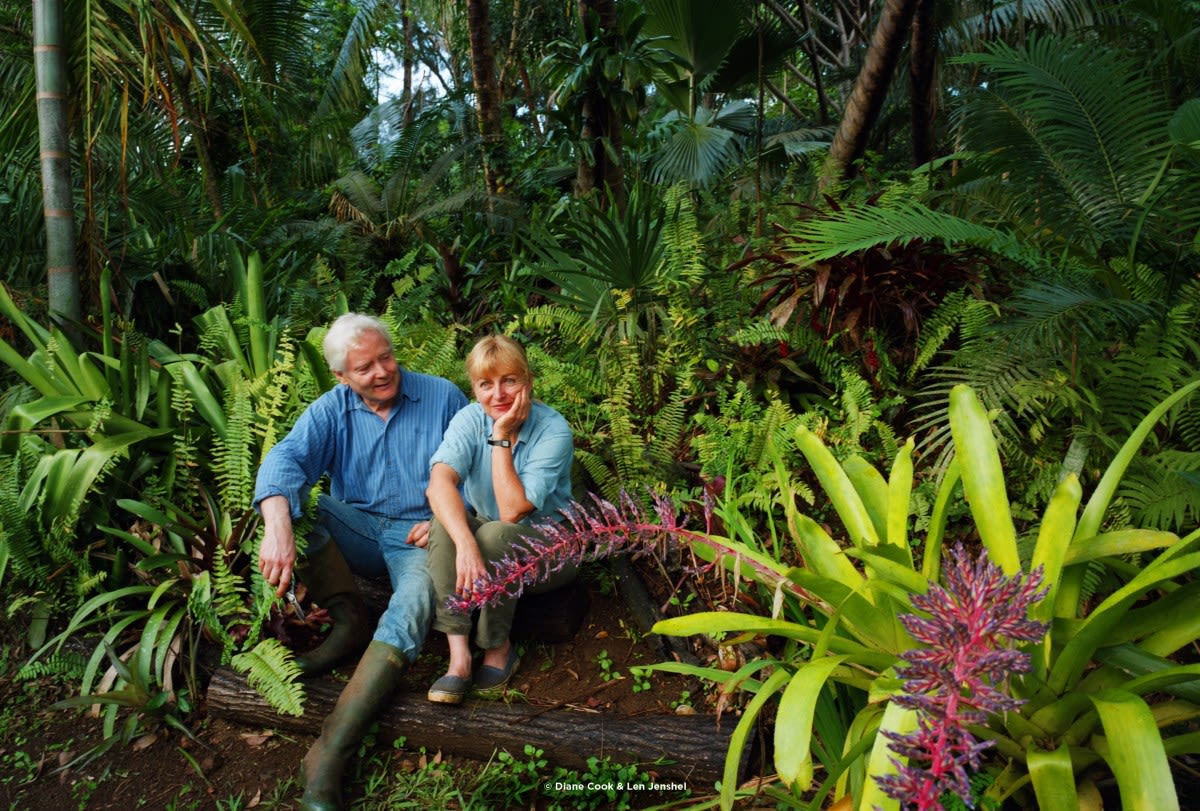

The Harry Ransom Center recently acquired more than 600 letters that former U.S. Poet Laureate W.S. Merwin wrote to his second wife, Dido Merwin (see Ransom Center Magazine, Spring 2025). The Center has now greatly expanded that collection with the acquisition of the remaining W.S. Merwin papers gathered from his home in Maui, Hawaiʻi, after his death in 2019.
Throughout his career, Merwin wrote poems that would earn him a Bollingen Prize, the National Book Award, the Pulitzer Prize for poetry, and was even named the U.S. Poet Laureate. Merwin moved to Maui in 1976, and alongside his writing, he also worked to restore the 18-acre plot he lived on, and in the following piece, Sonnet Coggins, Executive Director of the Merwin Conservancy, writes of W.S. Merwin’s commitment to this decades-long project.
The W. S. Merwin papers, now held by the Ransom Center, will be a primary resource for research and scholarship about this major American poet, including future biographies. Additionally, it will provide unique insight into his creative work and his equally deep commitment to the earth.

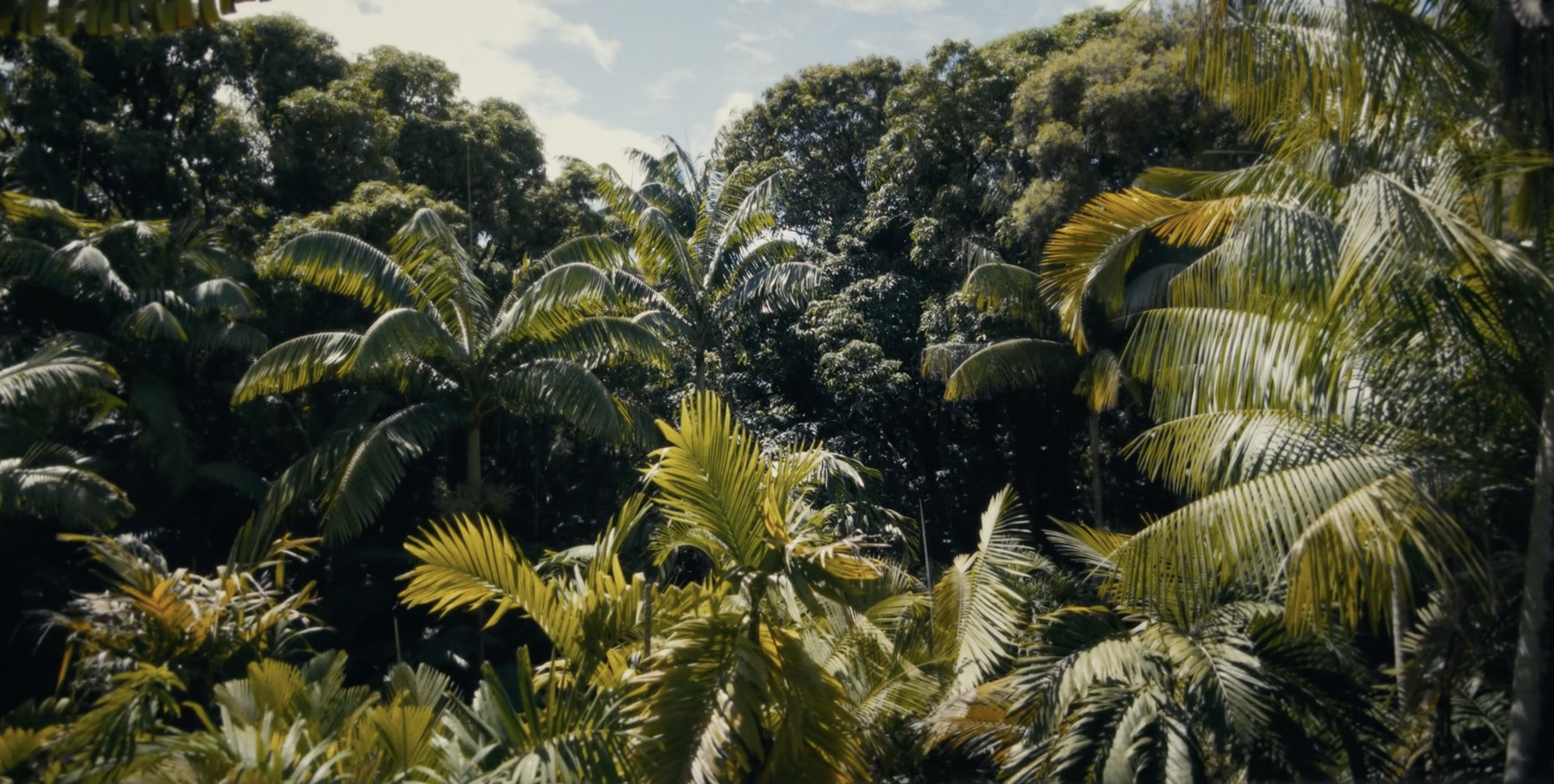
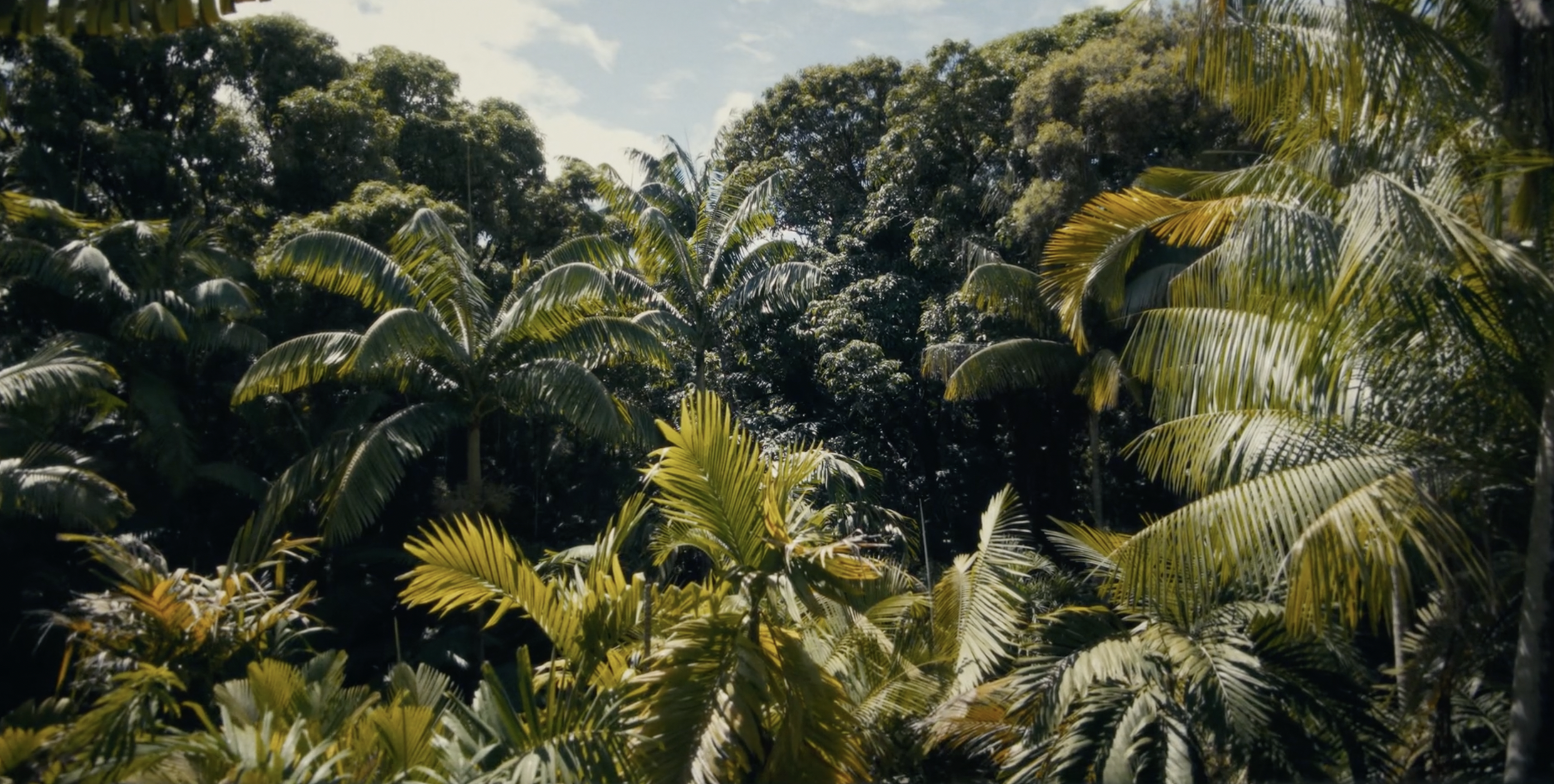
Up the rise on the far side of the poet W.S. Merwin’s garden, a vista opens above the canopy. As one looks northward over the ocean, the palm forest stretches out below, a riot of shapes and textures on a once-barren landscape. Visitors often marvel at the view from this ledge, and at the commitment that beckoned this garden into being: thousands of palms planted by one person, some grown from seed, some raised from seedlings, each one hand watered through its early months. Today, the palm forest is so dense that it obscures the view of the potting shed and shade house on the valley floor, and it hides the house that W.S. Merwin built by hand on the slope across the valley, and where he and his wife, Paula, lived and tended the land for four decades.
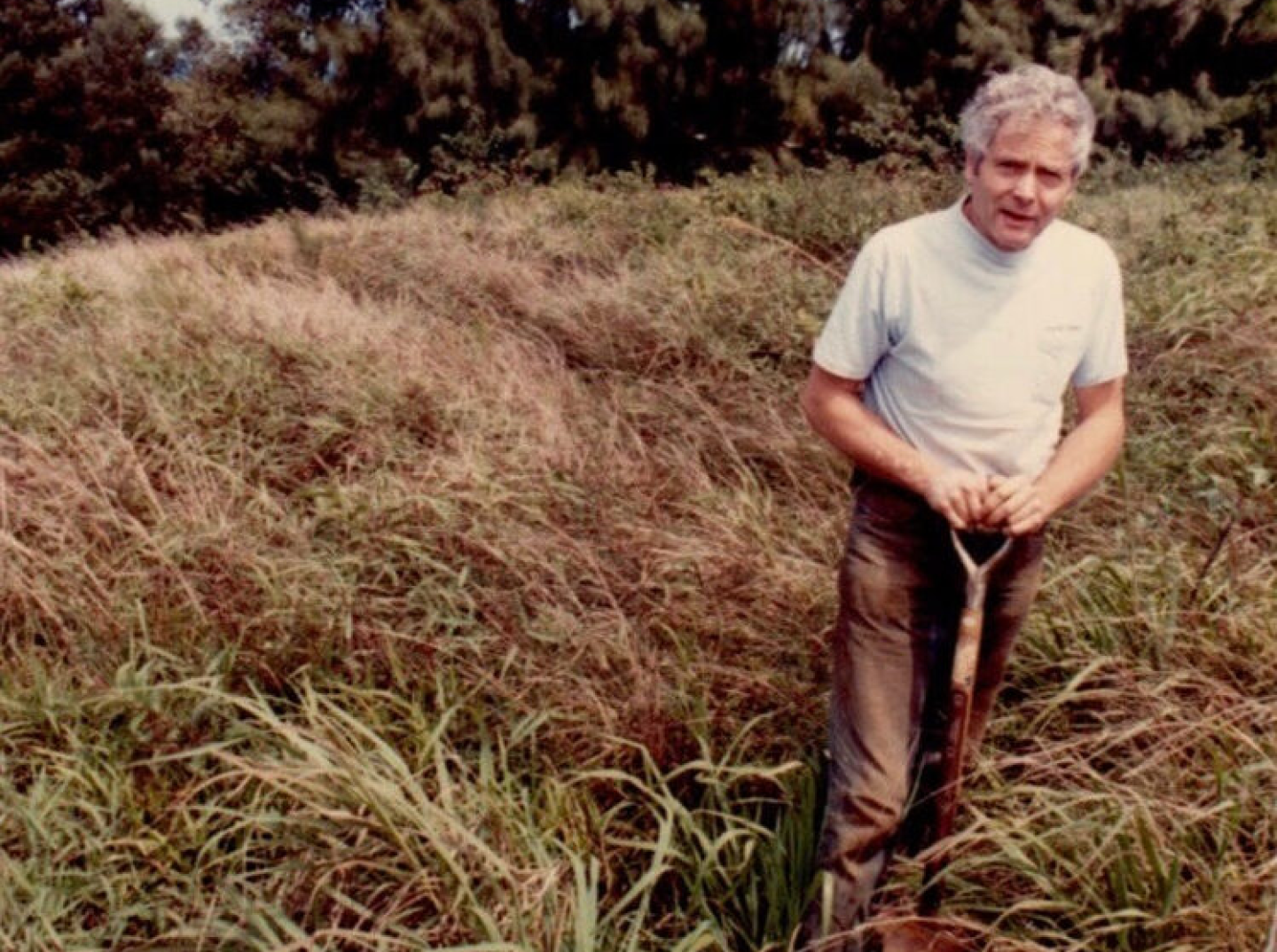
The garden makes for an astonishing expression of care for this world. In 1976, the poet W.S. Merwin arrived on Maui’s north shore to study with Zen teacher Robert Aitken. Soon after, Merwin found himself standing on the edge of a degraded landscape—its soil stripped by generations of extractive agriculture and its once-rich ecosystems long diminished. But what others might have seen as lifeless or lost, Merwin saw as possibility: “The condition of the soil did not, in itself, daunt me,” he wrote in The House and Garden: The Emergence of a Dream.
“I had long dreamed of having a chance, one day, to try to restore a bit of the earth’s surface that had been abused by human ‘improvement.’ I loved the wind-swept ridge, empty of the sounds of machines, just as it was, with its tawny, dry grass waving in the wind of late summer.”

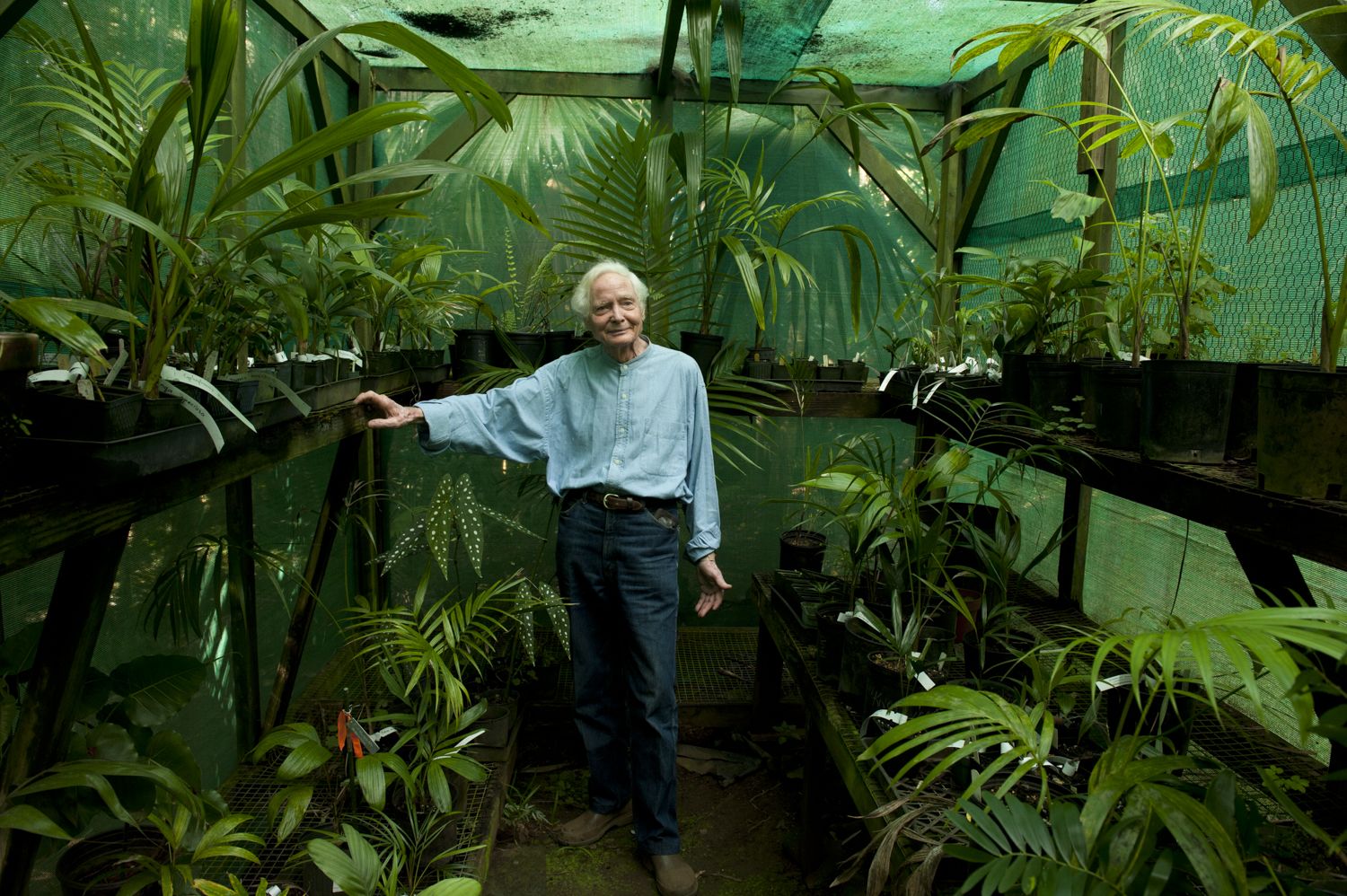
In 1977, the day he signed the escrow papers for the first three acres, Merwin planted his first saplings along the road. While many of the native trees he attempted to reestablish in those early years could not survive the depleted soil, the palms did. And so, Merwin planted palms every day—more than 3,000 over the course of three decades—hand-carrying buckets of water from the potting shed to sustain them until they could survive on rainfall alone. Over the years, as the garden eventually expanded to 18.8 acres, Merwin carried the bucket as far as he could to water each palm he planted. And he did it again the next day, and the next. Compost and manure nourished the earth, but it was this ritualized practice and daily effort of caring for the land that led to its transformation. Through this sustained effort, William and Paula painstakingly restored the land into what is now one of the most comprehensive palm gardens in the world and a living work of art.
Indeed, Merwin’s garden itself is a testament to the idea that there is another way—another way of living, of interacting with the earth, of manifesting our concerns with communion and pleasure. In an essay titled Coming to Palms, he wrote: “A garden is made of hope, which contributes to its pleasure and its fragility. It cannot be proven, nor clutched, nor hurried. And the hope of a palm garden is to be a palm forest.”


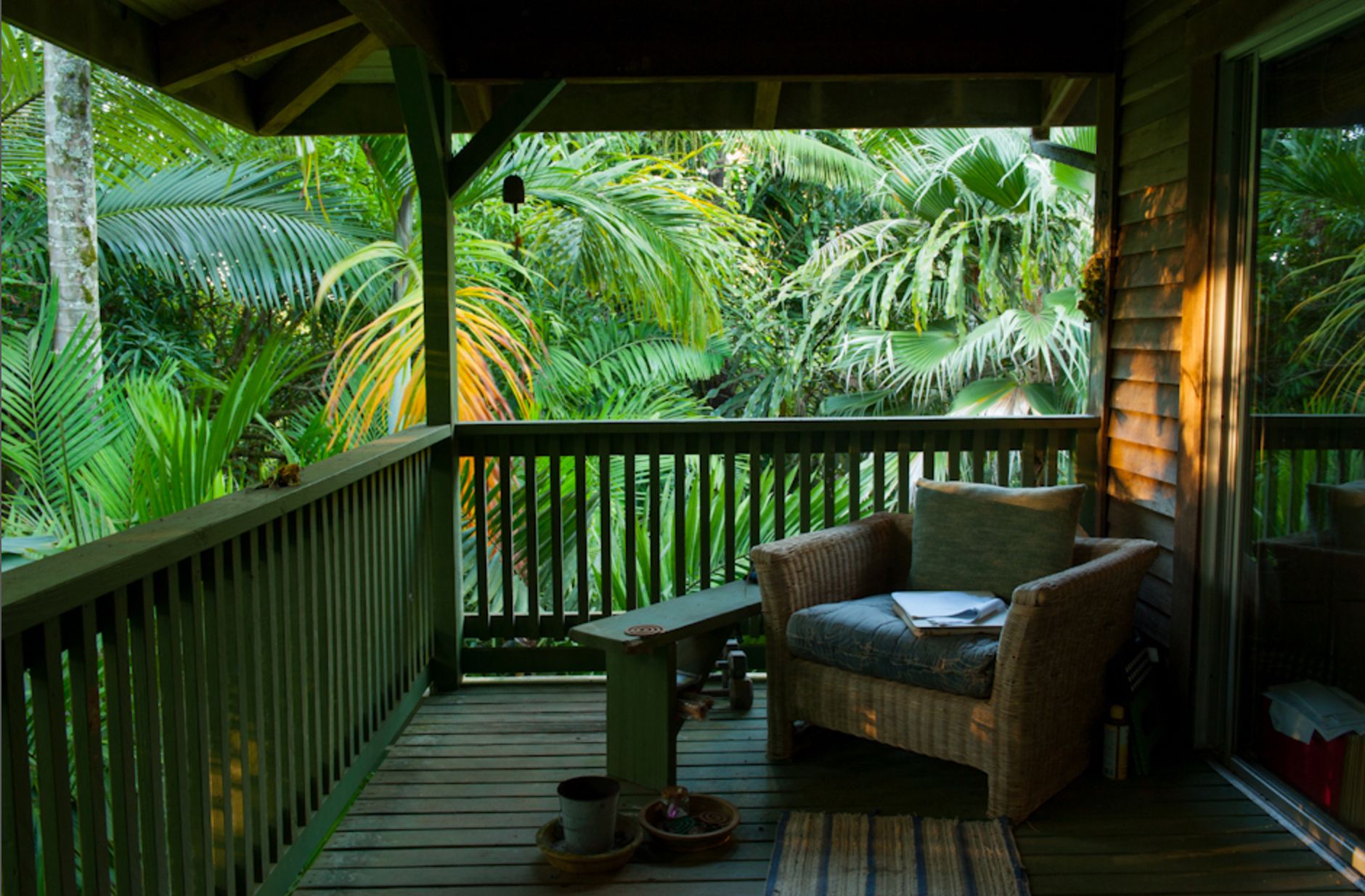
W.S. Merwin's Chair on the Back Lanai. Photo by Diane Cook & Len Jenshel.
W.S. Merwin's Chair on the Back Lanai. Photo by Diane Cook & Len Jenshel.
In the years since William and Paula’s deaths, and as the W.S. Merwin Conservancy has stepped in to care for the house and garden, the ideas that propelled this project continue to reveal themselves through his words. In essays and notebooks, now at the Harry Ransom Center, Merwin wrote about and reflected on his daily practice of tending the earth, grappling with the question of what a garden was, and what the garden he was making meant. “The model for this garden has always been the forest itself,” he wrote, “even though I know that the word ‘reforestation’ is generally meaningless, and that only a forest knows how to grow a forest.”
Merwin’s convictions extended beyond those 18 acres, as the contours of his curiosity and compassion for this island he called home reveal themselves time and again. He gathered extensive research materials on the endangered species of the palm genus native to Hawaiʻi, on efforts to save the ʻŌhiʻa forests and end the use of the herbicide paraquat. Among his writings are numerous yellowing newspaper articles, position papers, and calls to action in support of anti-nuclear efforts on the islands of Hawaiʻi and Maui, and oral histories related to the island of Kahoʻolawe, alongside photos and a journal recording his visit to that island to help plant trees after decades of bombing by the U.S. military.

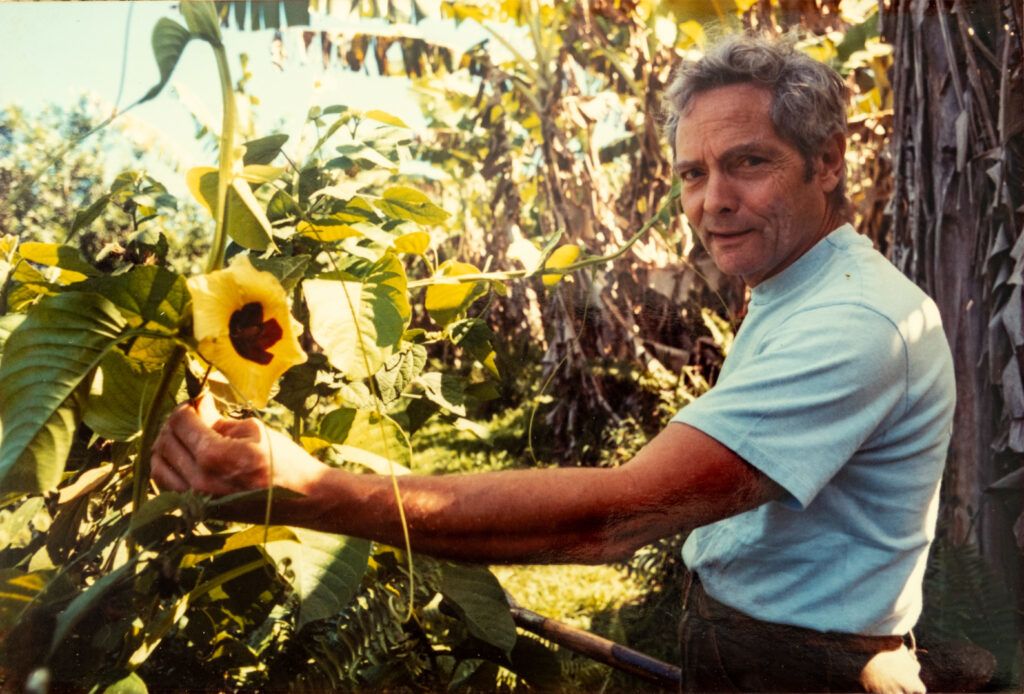
Through the filter of Merwin’s research comes the current of his convictions, and the poet's voice cast in a different key—a citizen’s voice, offered locally and nationally, and through oral and written testimony on a range of issues here in Hawaiʻi. They offer a reminder of the many scales and forms through which one might express care for the world—by way of seed, syllable, or system.
Special thanks to Sonnet Kekilia Coggins and the W.S. Merwin Conservancy for their contribution.

 Built with Shorthand