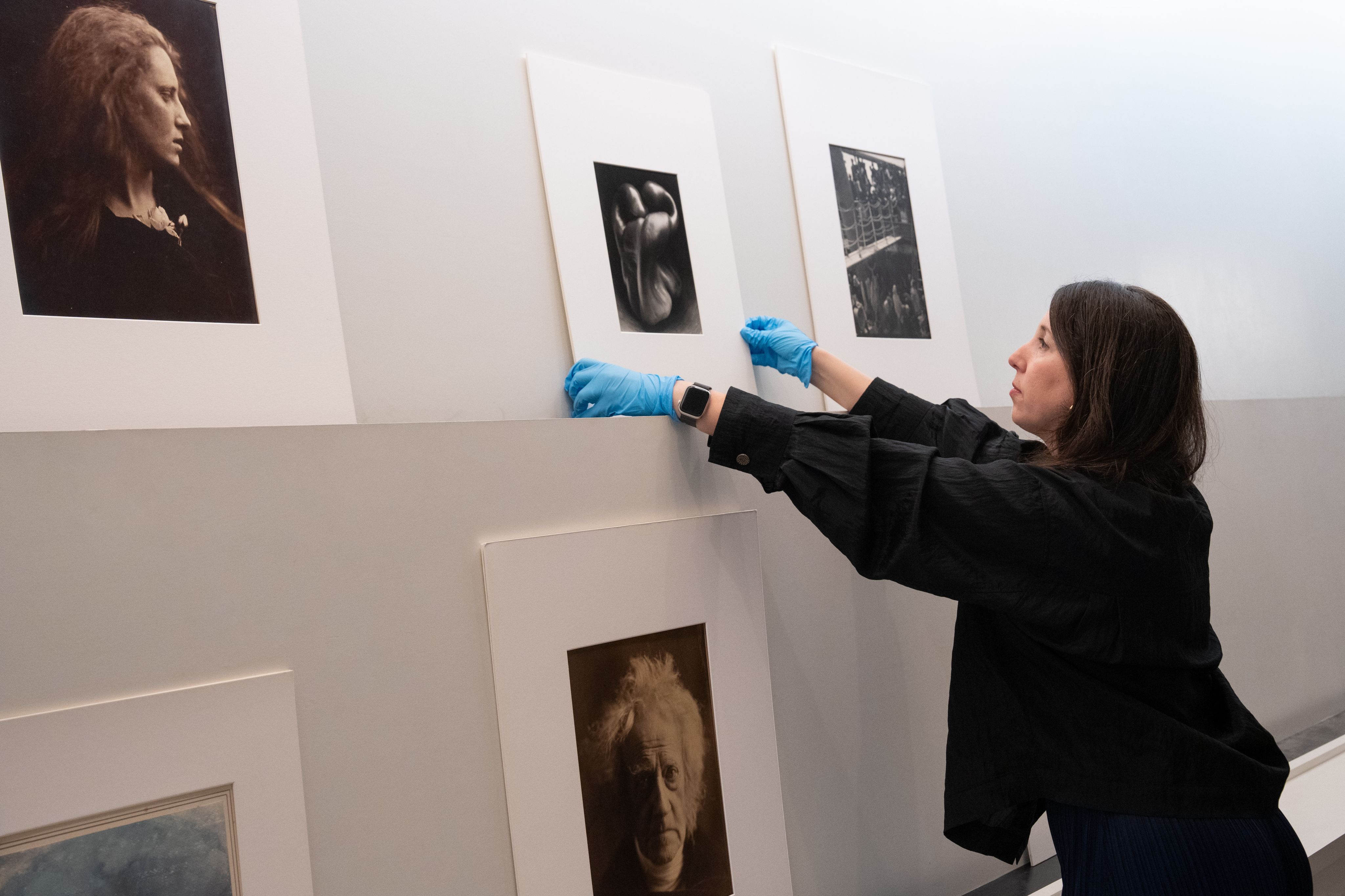
Welcoming Christine Robinson, the Ransom Center’s Nancy Inman and Marlene Nathan Meyerson Curator of Photography.

Introduction by Megan Barnard
We are delighted to welcome Christine Robinson to the Ransom Center as our new Nancy Inman and Marlene Nathan Meyerson Curator of Photography. Robinson previously taught in the Photography and History of Art and Visual Culture programs at California College of the Arts in San Francisco and has extensive museum experience. She served as both a curatorial assistant and graduate fellow at the Los Angeles County Museum of Art (LACMA) and as a curatorial assistant and educator at the Museum of Contemporary Art, Los Angeles (MOCA). She curated the exhibition Sarah Charlesworth: Image Language at Printed Matter in New York, based on her research with the artist’s archive.
Robinson has both a Ph.D. and an M.A. in Art History from the University of California, Los Angeles (UCLA), with a focus on contemporary art and photography and African American art and photography. She also holds a B.F.A. in Photography from Art Center College of Design in Pasadena and a B.S. in Art & Design from California Polytechnic State University, San Luis Obispo.
In this interview, Robinson shares her enthusiasm for engaging others in the rich history of photography and discusses the path that led her to the Ransom Center.

What inspired your love of photography?
My relationship with photography began behind the camera. I was given a 35mm camera at a young age and was lucky to have had a father who loved photography, but I really became serious about the medium in college. After trying various academic departments on for size, a modern art history class changed everything, motivating me to enroll in photography classes, put together a portfolio, and change my major.
As a photography student, the darkroom provided an especially integral aspect of my analogue practice, and I learned how to be a meticulous printer in black-and-white and color. I was also trained to work with various medium- and large-format cameras and artificial lighting.
Simultaneously, I studied with professors with art careers, who took us to see museum and gallery exhibitions and artists’ studios, and introduced us to curators and artists. I was drawn to both the technical and conceptual languages of the medium. Once I understood that so much of what I desired from the world could be found in art and photography, I couldn’t get enough.
When did you come to see curatorial work as a major focus for your career?
After college, I began working at MOCA, and as a curatorial assistant there, fell in love with the research and conceptualization that went into curatorial projects. What I wanted to do started to shift from making photographs to making exhibitions.
I saw that curatorial work would allow me to support artists and their legacies through art historical research, writing, exhibitions, and collection building. On a more theoretical level, organizing exhibitions offered a way to pursue questions, make connections, challenge established histories, and exchange ideas. All of this, combined with coordinating educational programming and other forms of public engagement, made a curatorial path feel like an ideal and exciting fit. I left MOCA to attend graduate school in art history at UCLA where I focused on contemporary photographic practice and the history of photography.


How have your previous roles at museums prepared you for your new position?
In my roles at MOCA and LACMA, and even a formative college internship I held at the San Francisco Museum of Modern Art (SFMOMA), I learned, among many things, that collaboration makes everything more successful. It also makes everything more enjoyable when you’re part of a team. A curator is just one of many individuals necessary to pulling off a great show, publication, or program. I’m really looking forward to collaborating with my brilliant and dedicated colleagues here at the Ransom Center and learning from their institutional knowledge and areas of expertise.
You have extensive teaching experience. What do you enjoy most about engaging students with photographs and the history of photography?
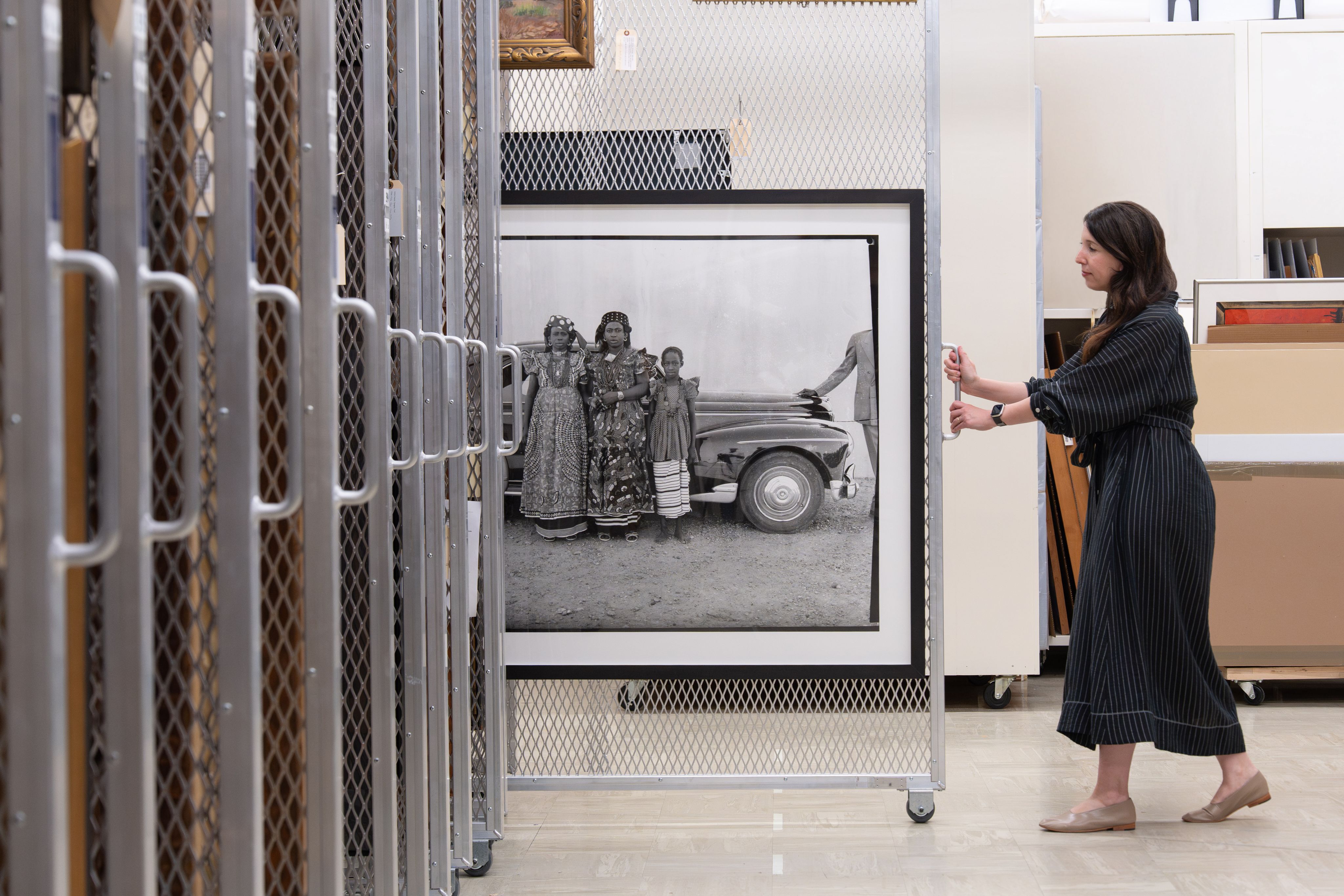
As an adjunct professor at California College of the Arts, an important aspect of my teaching methodology was to shake up the lecture format as much as possible. First-hand experience is invaluable when studying art, so I incorporated photographic objects such as daguerreotypes and stereoscopes with stereo cards into my lesson plans. We also took field trips to museums and galleries and conducted studio visits with artists. I see my role as an educator as very interdisciplinary, and I think it’s critical to present a range of art works up close and to bring in a variety of voices.
At the Ransom Center, the opportunities to teach with objects are abundant. I look forward to sharing the photography collections with students here and providing opportunities for close looking and interpretation. Seeing students marvel at the photographs in front of them is truly one of the best parts of the job.
Are there specific collections at the Ransom Center that you are especially excited to begin working with?
Conducting dissertation research on Joseph Nicéphore Niépce’s Heliograph from 1827 initiated my awareness of the Ransom Center’s Gernsheim Collection, which comprises some of the most important photographs and photographers from the medium’s history. In my first month here, I’ve been able to start exploring the Gernsheim Collection, but I’m of course eager to see more, including the full scope of works by Louis-Jacques-Mandé Daguerre, William Henry Fox Talbot, Julia Margaret Cameron, Nadar, Anna Atkins, and many others.
It's very exciting to focus on these foundational moments and their legacies in the history of photography, but I also see their potential as starting points for conversations across time, geographies, identities, and disciplines. I’m invested in the importance of expanding histories of photography and forming inclusive narratives that fill in critical gaps of under-recognized voices. With the Ransom Center’s vast collections of photographs, I’m eager to dive in and make new connections that prioritize this thinking.
What are you looking forward to most about your new position as the Nancy Inman and Marlene Nathan Meyerson Curator of Photography?
The photography holdings at the Ransom Center have so much to offer to students, scholars, and the public, with limitless opportunities for teaching, research, and scholarship. I’m looking forward to bringing more attention to the strength of our collections through exhibitions and acquisitions, as well as public programs, such as photography-focused lectures, conversations, and symposia. I’d like to build up our photography community here by hosting artists, writers, and other thinkers to engage with the collections in new and inspiring ways.
What do you like to do outside of work?
When I’m not working, I love visiting museums and other art spaces, seeing films, and reading literary fiction and photobooks.
The Harry Ransom Center welcomes Christine Robinson, the Nancy Inman and Marlene Nathan Meyerson Curator of Photography.
For general inquiries on our collection, please contact us.
Photography by Trent Lesikar.

 Built with Shorthand